


Christmas Mahjong: Holiday Fun
4.64.70K Reviews
App Specs
- Version
- 1.0.87
- Updated On
- License
- Free
- Downloads
- 500,000+
- Developer
- Beautiful Mahjong Games by Difference Games
- Categories
- Board
- Platform
- Android
Screenshots


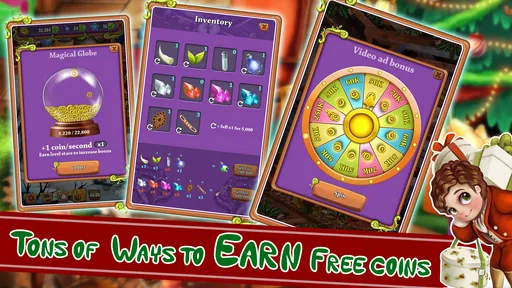
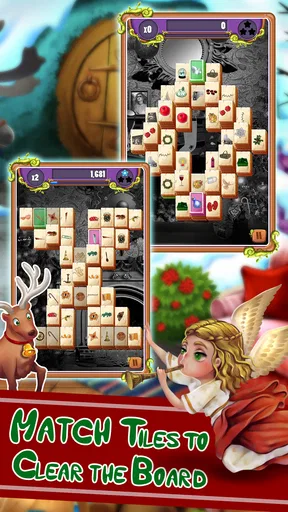
 Analysis by AppCompare
I enjoy puzzle games that are easy to understand but still give my attention something useful to do, and Christmas Mahjong: Holiday Fun fits that mood well. It is a free board game from Beautiful Mahjong Games by Difference Games, built around the familiar tile-matching rules of mahjong solitaire with a seasonal presentation. The idea is simple: clear matching tiles from a festive layout, look for available pairs, and keep the board moving until the puzzle is finished.
That simplicity is the main reason I can imagine recommending it to a friend. I do not need to learn a complicated control system, create a competitive strategy, or commit to a long session. I can open it when I want a quiet break, play a puzzle while waiting somewhere, and stop when I feel done. At the same time, the game is not automatically perfect for every mahjong fan. Its appeal depends heavily on whether you enjoy a relaxed holiday theme and traditional matching more than deep progression, competition, or a large collection of advanced modes.
How the holiday mahjong format feels in everyday play
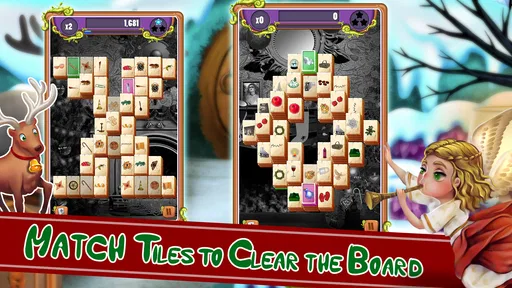
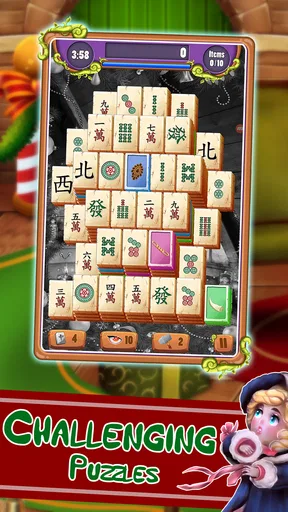
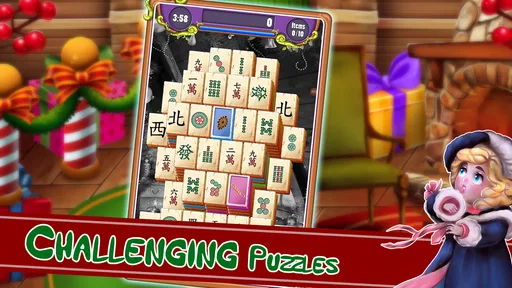
The board presents the classic mahjong solitaire challenge rather than the four-player table game. I focus on uncovering matching tiles, choosing pairs that are currently available, and avoiding moves that leave the remaining layout awkward. That distinction matters if you are downloading it expecting a multiplayer mahjong room or a traditional score-based table. This is a solo board puzzle, and its rhythm is much calmer.
The Christmas setting gives the familiar format a more specific personality. Instead of feeling like a plain abstract tile exercise, the game is designed for seasonal play, which makes it particularly suitable during the holiday period or whenever you want something cheerful without a demanding story. The theme does not change the basic logic of the puzzle, but it does affect the atmosphere. For me, that makes short sessions feel more inviting than opening a completely neutral mahjong board.
The controls are naturally suited to a phone or tablet. Matching tiles is the sort of interaction that works well with touch because the action is direct: identify a pair and tap it. The important challenge is not learning gestures; it is reading the board carefully. Small screens can make layered arrangements harder to inspect, so I prefer playing with the device held steadily rather than rushing through pairs.
A useful habit is to pause before every obvious match. The first pair I notice is not always the best pair to remove. Clearing one tile may expose another useful option, while taking a different pair can leave a valuable tile blocked. I found that treating each move as a small planning decision makes the game more satisfying and reduces the feeling that I am simply tapping whatever looks available.
Small decisions matter more than fast tapping
One of the less obvious strengths of this format is that it rewards visual housekeeping. I scan the upper layers first, then check which tiles are limiting access to the lower ones. When several pairs are available, I usually choose the move that opens the most space rather than the move that is easiest to see. This approach is helpful for anyone who tends to get stuck in tile puzzles because it turns the board into a sequence of priorities.
Worth Reading Before You Choose

EA SPORTS FC Mobile 26 Is a Bigger Football Game, but It Takes Time

Flipboard Shows What News Apps Must Do Beyond the Feed

Switching to Android Auto Means Rethinking Your Driving Routine

Google Calendar Makes a Crowded Week Easier to Manage

Ludo King Makes the Most of the Minutes Between Plans

Baby Panda World Brings Quick Play to Modern Phones, but Its Game Library Feels Busy
I also recommend looking for pairs that have more than one possible partner before committing. If a tile can match several visible tiles, removing the flexible option too early may reduce the choices left later. That is a small tactical detail, but it makes a noticeable difference in a layered mahjong solitaire layout. The game works best when I play with patience instead of trying to finish as quickly as possible.
Another practical tip is to use the game as a short reset rather than automatically treating every session as a long challenge. A few careful minutes can be enough to break up a repetitive day. For example, I can imagine playing it during a coffee break, after finishing a household task, or while waiting for an appointment. The seasonal artwork gives that pause a little more character than a generic matching exercise.
Progress, pressure, and the cost question
The game is free to download, which makes trying it straightforward. It also includes optional in-app purchases ranging from $1.99 to $19.99 per item. That is the spending context I would keep in mind before starting: the core download does not require an upfront purchase, but the presence of paid items means I would check the purchase flow carefully before handing the device to a child or allowing unrestricted buying.
I would not describe the purchase range as a reason to avoid the game by itself, but I also would not assume that every useful convenience is included at no cost. The important distinction is between enjoying the basic puzzle and feeling pressured to buy something to continue comfortably. From the information available about the game, I can state the prices of the optional items, but I cannot responsibly claim what each item unlocks, whether purchases remove interruptions, or whether they affect puzzle completion. I would make that decision only after reading the in-game purchase descriptions.
That uncertainty is relevant to the way I judge progress. A good mahjong solitaire game should make me feel that careful observation is valuable, not that spending is the main route around a difficult board. Since the confirmed details do not describe a purchase-based advantage system, I would avoid assuming that one exists. I would simply approach the game as a free puzzle first and treat any optional transaction as something to inspect rather than something necessary.
For families, the Everyone content rating is reassuring in terms of the intended age audience, but an age rating is not the same as a spending safeguard. If a child is using the game, I would still rely on the device’s purchase controls and supervision. That is sensible for any free game with optional paid items, especially when the exact role of those items is not part of the basic game description.
The game is currently listed as version 1.0.87 and supports devices running Android 7.0 or later. Those details make it accessible to a broad range of older Android phones and tablets, although actual comfort will still depend on screen size and performance. I would choose a larger display if I expected to play frequently, because layered tiles are easier to distinguish when the board is not cramped.
Fairness for solo players and competitive expectations
Because this is a solo board puzzle, fairness means something different here than it does in an online competitive game. I am not matching against another person, so there is no opponent ranking, head-to-head matchmaking, or visible competitive advantage to judge. My experience is mainly about whether the puzzle gives me a clear, understandable challenge and whether optional spending changes that challenge.
That makes it a better fit for players who want private concentration than for people looking for social competition. If I want to compare skill with friends, climb a leaderboard, or test myself against live opponents, I would choose a different type of mahjong app. This game’s strength is the absence of that pressure. I can make a mistake, rethink the board, and play at my own pace without worrying about another player waiting for my move.
There is also a fairness benefit in the tactile simplicity. The outcome depends largely on what I notice and how I sequence my available pairs, rather than on fast reflexes. That gives the game a more welcoming feel for casual players, older users, and anyone who prefers visual reasoning over time-sensitive action. It is still possible to make a poor decision early, but the mistake feels connected to the board rather than to a demand for rapid tapping.
On the other hand, players who need transparent competitive rules may find the experience too private. A solo puzzle can be relaxing, but it does not provide the external motivation that comes from a rival, a shared score, or a tournament. I would not download this specifically to prove I am better than someone else. I would download it to give myself a focused, seasonal puzzle routine.
Compared with a standard mahjong solitaire app, the biggest difference is the Christmas identity. A plain alternative may be better if I want a neutral interface that I can use all year without seasonal decoration. A multiplayer mahjong game may be better if conversation and rivalry are central to what I enjoy. A more elaborate puzzle title may suit me more if I expect detailed goals, extensive progression, or several distinct rule sets. Christmas Mahjong: Holiday Fun makes the most sense when the familiar board format and holiday mood are both part of the appeal.
What I would check before spending or settling in
The verified details establish that the game is free and has optional items priced from $1.99 to $19.99, but they do not explain the exact content of those purchases. That is the main practical unknown I would investigate inside the app. I would want to know whether an item is cosmetic, convenience-based, related to hints, or connected to another part of play before buying it. I would also check whether the purchase is genuinely optional for the way I intend to use the game.
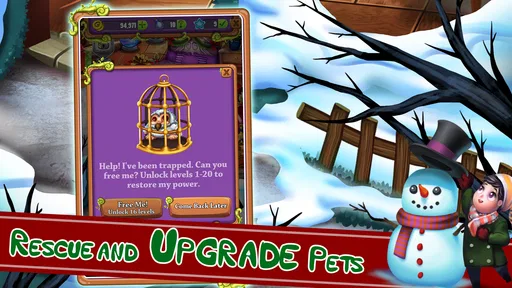
I would take the same careful approach to progression. The basic description tells me that the game centers on matching tiles in a Christmas-themed mahjong solitaire puzzle, but it does not establish a detailed system of levels, rewards, timers, lives, or unlockable modes. I would not promise those features to a reader, and I would not install it expecting them. If a structured campaign is essential to my enjoyment, a game that clearly advertises that type of progression would be a safer choice.
This is not a criticism of the title so much as a reminder to match expectations to the confirmed experience. The game clearly communicates its central activity and its seasonal direction. It does not need to be something larger than that to be worthwhile. Problems arise only when I bring assumptions from other puzzle games and expect a long-term achievement system, competitive events, or a particular purchase model that has not been established.
I would also consider the seasonal theme’s staying power. During the holidays, it can make a familiar puzzle feel timely and pleasant. Outside that period, my reaction may depend on how much I enjoy Christmas visuals throughout the year. Someone looking for a timeless mahjong interface may prefer a less specific design, while someone who likes festive games can see the theme as the main reason to choose this one over similar board puzzles.
Who should play it, and who should skip it
I think it is a good match for casual solo players who already understand mahjong solitaire or want an approachable way to try it. It suits people who enjoy visual pattern recognition, deliberate choices, and sessions that can begin without much preparation. The Everyone rating also makes it a reasonable candidate for a family device, provided adults manage the optional purchase settings.
I would especially recommend it to someone who wants a low-pressure holiday game rather than an intense brain-training challenge. The Christmas presentation adds a friendly seasonal touch, and the basic rules are familiar enough that I can start playing without studying a manual. It is also a sensible option for an older Android device because the minimum operating system is Android 7.0, though I would still prefer a screen that gives the tile layout enough room.
I would skip it if I mainly want online opponents, a competitive ranking, or a traditional multiplayer mahjong table. I would also look elsewhere if I need clearly documented long-term progression before installing. Players who dislike seasonal decoration may find the theme too narrow, and anyone who is uncomfortable with optional purchases should review the in-game buying information before allowing regular access.
My everyday use case is simple: I open it when I want a quiet activity that occupies my eyes and hands without demanding sound, conversation, or a fast reaction. I make a few cautious matches, stop when my attention fades, and return later if I feel like continuing. That makes it more useful to me as a small routine than as a game I would play for hours at a time.
My trust verdict
Beautiful Mahjong Games by Difference Games has made a focused board puzzle rather than an all-purpose mahjong platform. The verified audience response is strong, with a 4.6 average from around 15 thousand ratings, and the game has passed half a million installs. Those figures suggest that the simple seasonal formula has found a substantial audience, although popularity alone does not tell me whether its purchase approach or progression style will suit every player.
What I trust most is the clarity of the central idea: this is a free Christmas-themed mahjong solitaire game, not something I need to interpret through a complicated premise. I can judge it on the quality of its tile-matching routine and the atmosphere it creates. The main caution is equally clear: optional purchases exist, and their exact role should be checked in the app before spending.
My recommendation is to try it as a relaxed, festive solo puzzle rather than as a competitive mahjong experience. If that is what I want, the straightforward format and seasonal setting make it an easy choice. I would keep my expectations realistic, supervise purchases on a shared device, and avoid paying until I understand what an item provides. With those boundaries in place, Christmas Mahjong: Holiday Fun is a pleasant option for quiet matching sessions, especially for players who enjoy holiday atmosphere more than complex systems or online competition.
Pros
- Relaxing tile-matching gameplay suitable for short breaks.
- Festive Christmas artwork creates a cheerful seasonal atmosphere.
- Simple controls make it accessible for casual and new players.
- Multiple layouts offer variety beyond a single puzzle.
- Offline play is convenient when traveling or without internet.
Cons
- Seasonal theme may feel repetitive outside the Christmas period.
- Some puzzles can become predictable for experienced Mahjong players.
- Small tile details may be difficult to distinguish on phone screens.
- Progression may lack depth for players seeking competitive features.
- Ads can interrupt the experience in the free version.
FAQs for Christmas Mahjong: Holiday Fun
What is Christmas Mahjong: Holiday Fun?
Christmas Mahjong: Holiday Fun is a seasonal mahjong puzzle game built around a cheerful Christmas theme. Players match identical festive tiles, clear layouts, and progress through holiday-inspired levels. The game is designed for casual play, making it suitable for short sessions while still offering increasingly challenging boards for players who enjoy traditional tile-matching puzzles with a winter atmosphere.
How do you play Christmas Mahjong: Holiday Fun?
The main objective is to remove all tiles from each board by selecting two matching, available tiles at a time. A tile is generally available when it is not covered and has an open side. Careful planning is important because choosing pairs too quickly can leave difficult combinations later. Players should also watch for special tile designs and use hints or shuffle options when a layout becomes hard to solve.
Can Christmas Mahjong: Holiday Fun be played offline?
The core mahjong levels can generally be enjoyed without a constant internet connection, which makes the game convenient for travel or quick offline entertainment. However, some features may depend on connectivity, including advertisements, optional rewards, updates, leaderboards, or promotional events. For the most reliable experience, open the game online occasionally so it can synchronize content and download any available updates.
Is Christmas Mahjong: Holiday Fun free to download and play?
Christmas Mahjong: Holiday Fun is typically offered as a free download, allowing players to begin solving puzzles without an upfront purchase. Like many casual mobile games, it may include advertising, optional in-app purchases, or paid items connected with hints, extra moves, ad removal, or other conveniences. Check the store listing and the purchase settings on your device before downloading, especially if children may use the app.
Is Christmas Mahjong: Holiday Fun suitable for children and beginners?
The simple matching rules, colorful Christmas artwork, and relaxed pace make Christmas Mahjong: Holiday Fun accessible to beginners and younger players who understand basic puzzle instructions. Difficulty can increase as layouts become more complex, so some levels may require patience and planning. Parents should still review the game’s advertising and in-app purchase settings, since the exact content and controls can vary by device and version.


